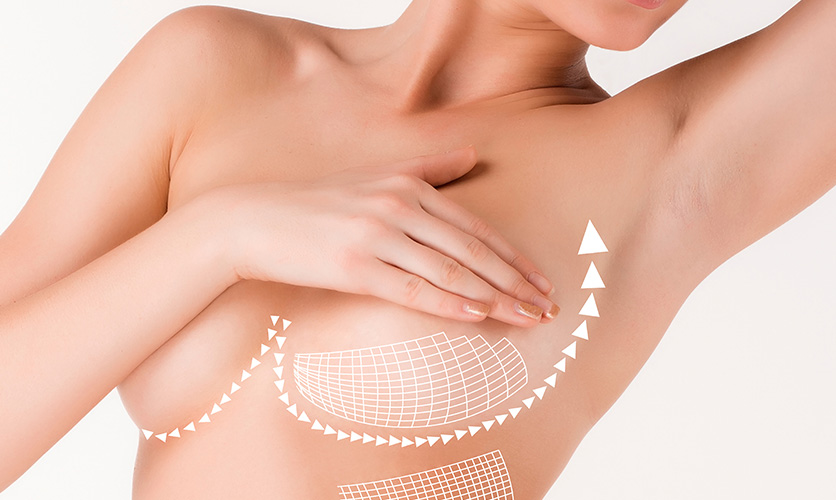
The reasons for having breast augmentation surgery are very personal. In line with the needs and expectations of the person, planning together with a person's doctor will be the most accurate approach. In breast augmentation surgery, the aim is not only to enlarge the breast but also to obtain uniformly shaped and symmetrical breasts that suit the general body structure of the person.
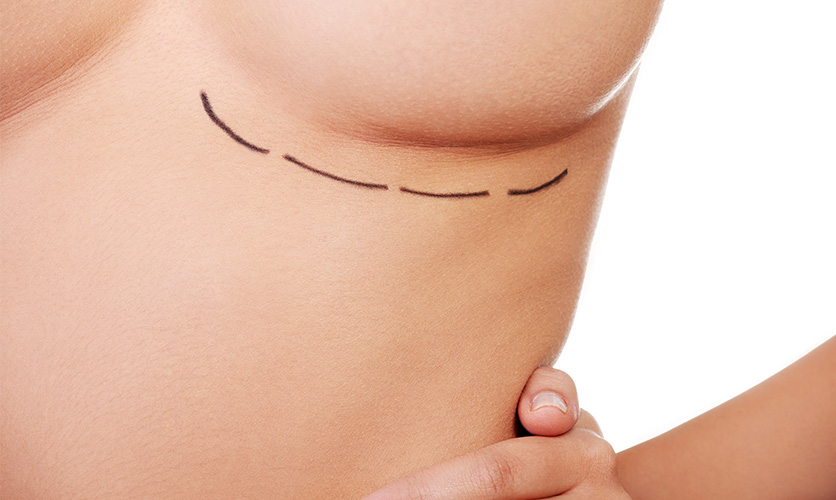
Breast augmentation operations are performed under general anaesthesia and last for 1-1.5 hours. The silicone breast prostheses can be placed under the mammary gland tissue, under the breast muscle or under the breast muscle membrane through a small incision made in the nipple or under the breast. Most of the time, drain usage isn't required. In these surgeries, the hospital stay is usually 24 hours and postoperative recovery is very quick. Patients can usually return to their work and social life within a few days.
One of the frequently asked questions about silicone breast prostheses is whether these prostheses will cause any disease, especially breast cancer, and how to perform routine breast follow-up sessions after the prosthesis is placed. No relationship has been found between breast prostheses and the development of breast cancer. The annual breast controls that should be performed in every woman can be applied in the same way in patients with breast prosthesis. Another question that patients want an answer for is whether they can breastfeed their babies after giving birth. Women with sufficient mammary glands can easily breastfeed their babies after breast augmentation surgery. Silicone prostheses have no negative effect in this respect.
Frequently Asked Questions About Breast Augmentation
Having accurate information about aesthetic and plastic surgery procedures is an important part of preparing consciously for the treatment process. In this section, you can find answers to the questions patients most frequently ask about preoperative preparation, recovery, surgical procedures and non-surgical aesthetic treatments.
Choosing the right implant for breast augmentation is not simply a matter of deciding how many cc to use. Chest width, breast base, the thickness of existing breast tissue, skin quality and the patient's body proportions are assessed together. Implants of the same volume may have different widths and projections; therefore, the same implant does not look the same on two people.
Implant volume is expressed in cc, but volume alone does not determine breast shape. Base width and projection also matter. For example, of two implants with similar volumes, one may be wider with a lower projection, while the other is narrower with a higher projection. Therefore, the question “How would 350 cc look on me?” cannot be answered reliably without assessing the patient's anatomy.
The implant's width should match the patient's natural breast base and chest. Implants that are too wide or too narrow may adversely affect the breast boundaries, their relationship to the midline and overall proportions. Measuring the breast base is therefore one of the fundamental steps in surgical planning.
Yes. Patients with thin skin and little breast tissue are more likely to have visible or palpable implant edges. In these patients, the anatomical plane in which the implant will be placed becomes as important as its size.
No. Implants larger than the patient's tissues can support may increase the risk of problems such as tissue thinning, implant visibility, changes in the inframammary fold and sagging over time. Planning should consider both the early appearance and the long-term behaviour of the tissues.
A natural appearance is not achieved through a particular implant brand or volume. The breast base, chest, skin and soft-tissue quality, implant width and projection, and the patient's expectations are assessed together. The aim is to create a sustainable result that is compatible with the patient's anatomy.